How to Tell If a Leather Bag Is High Quality: 10 Key Details
The question how to tell if a leather bag is high quality is not easy to answer. At first glance, many bags look appealing; whether they are well made is another matter. Quality rarely depends on a single factor. It usually comes down to a combination of well-executed choices: the material, finishes, structure, hardware, and how well the design suits its intended use.
To be clear, we are talking about quality, not luxury. The key difference is that quality is a functional characteristic (durability, materials, performance), while luxury is more aspirational and based on exclusivity, prestige, and price (often high and exceeding its functional value).
If you also want to make an informed purchase, it is wise to be wary of shortcuts. Quick tests and simplified advice circulate online and may sound convincing, but they do not always help distinguish a good bag from a mediocre one. Looking at the bag as a whole remains the most reliable approach.
Naturally, the price and how much you trust the company or craftsperson making the bags are indicators of the quality you can expect, but other details can help you make your decision. Here are a few.
1. Leather does not need to be artificially perfect
One of the first clues is the surface. A high-quality leather bag does not have to look completely uniform, flat, or overly rigid. Natural leather can show small variations in texture or subtle differences inherent to the material.
That does not mean accepting obvious flaws. Rather, it means being wary of overly plastic-looking finishes or the somewhat lifeless perfection that sometimes aims to look flawless but ends up feeling impersonal.

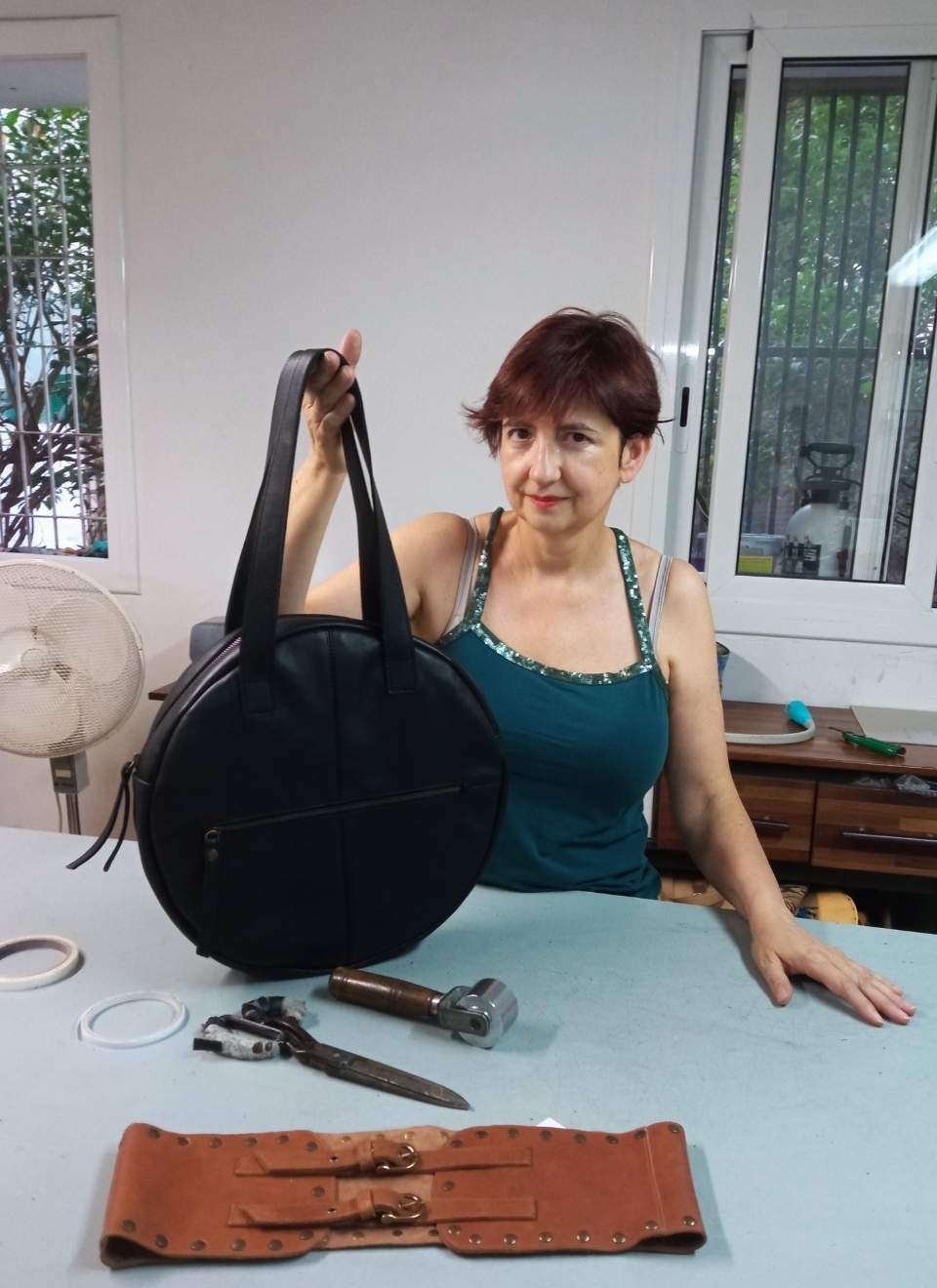
A look at the handmade bag-making process in our workshop in three snapshots. Cutting the individual pieces, assembling them, and stitching them are all part of the process.
2. The feel is revealing
The feel matters, but it is not a magic formula. Not all good leather feels the same. Some leathers are soft, supple, and drape well; others have more body and structure. What matters is that the feel suits the bag's design and does not feel artificial, hollow, or plastic-coated.
When someone searches for how to recognize a high-quality leather bag, they often expect a definitive answer. There isn't one. There is, however, a fairly reliable clue: a good material usually feels right without the need for much explanation.
3. Leather: beyond the labels
When considering how to tell if a leather bag is high quality, it is common to look for a label that confirms everything. In practice, there is not always a visible certification, nor is one essential for assessing a good material.
The quality of leather is better judged by how it behaves than by its name.
Good leather:
- has a natural texture that is not overly uniform
- feels good to the touch, without artificial stiffness
- shows character without looking flawed
By contrast, lower-quality leather often relies more on its surface finish: it looks perfect at first, but proves less convincing with use.
Rather than focusing on a particular label, look at how the leather works as part of the whole bag: how it drapes, adapts to the shape, and feels to the touch.

Detail of the Envelope bag. Bronze-Colored Metallic Leather. Minimalist and glamorous.

Silver Erica. Elegant and versatile: it can be carried by hand, over the shoulder, or crossbody.

This crescent bag, with a leather handle and metal chain, is stylish and unique. It combines leather and animal-print hair-on hide.
4. Edges reveal a lot
Edges are among the most exposed areas and also among the most revealing. A well-made bag usually has clean, even, carefully finished edges.
When the edges look rough, uneven, or poorly finished, it is reasonable to suspect that the rest of the process was not particularly meticulous either.
On quality bags, you may see these details:
- Folded or sealed edges: The pieces are usually folded inward and stitched (like the hem of a dress) or sealed to prevent wear.
- Burnishing: The edges of thick leather are polished until smooth, rounded, and natural, blending into the surface of the material.
- Edge painting: applied in thin, even layers that do not crack easily.
5. Clean, even stitching
Focus less on myths and more on results. Stitches should look straight, even, and well integrated into the bag.
- Uniformity: The stitches are identical in length, perfectly aligned, and run parallel to the edge without deviating.
- Density: There are more stitches per inch (generally 3 to 5 per centimeter). This provides greater strength.
- Reinforcement: High-stress points, such as handle attachments or zipper ends, have reinforced stitching, sometimes double or triple.
- Finish: The thread is usually strong, and the ends are secured invisibly or with neat backstitching.
An important distinction: not everything handmade is hand-stitched, nor would it make sense for it to be. With soft leather, machine stitching allows for a cleaner, more suitable finish. What matters is not the method in itself, but that the stitching is well executed and suited to the type of leather and the bag's structure.
6. The handles should feel secure
Handles are subject to real strain. That is why they deserve special attention. Look at how they are attached to the body of the bag, whether the connection seems sturdy, and whether the area feels secure without unnecessary stiffness.
Among the signs of quality in a leather bag, this is one of the most practical. A bag may be beautiful, but if the handles are poorly made, daily use will soon reveal it.


Black Studded Tote. The hardware adds character. Made from soft, durable leather. The exterior snaps create a more compact shape,
7. Hardware is part of the whole
Clasps, zippers, and rings are as much a part of the bag as the leather itself.
A good bag pays attention to these elements: they work properly, have a good finish, and fit with the overall design. They do not need to draw attention, but neither should they look like an afterthought.
No good bag has poor hardware, because it clearly detracts from the whole. A medium- or low-quality bag is more likely to feature flashy hardware to disguise its shortcomings and boost its visual appeal.
8. The interior matters too
When considering what to look for when buying a leather bag, the interior should not be overlooked.
The lining, pockets, and internal construction reflect the care taken in making the bag. A neglected interior is often a sign of an poorly conceived product.
The number and design of the interior compartments, the quality and consistency of the lining, and details such as straps for attaching keys so they are easy to find all point to well-designed, well-made bags.


Coral Maxi Tote in cowhide leather with a crocodile effect. Handmade, with reinforced handles and an interior laptop sleeve.
9. Design and functionality
Anyone wondering how to choose a leather bag usually thinks about appearance first. That makes sense. But a good bag should not just look good: it has to work.
Weight, access, capacity, and comfort are decisive factors. If the design does not meet the needs of real use, the bag loses value.
A bag can be flexible or structured. Neither is inherently better. What matters is that its shape serves a clear purpose.
When the shape does not suit how the bag is used, it loses its shape and coherence, and its quality suffers.
10. Do not trust quick tests found online
On social media and in many fashion magazine and website articles, you will find tests involving smell, a drop of water, or even applying a flame to the material to determine whether a bag's leather is good. Take these with a grain of salt: among other things, they are outdated, tend to compare leather with synthetic materials, and are never entirely reliable.
The smell test -- if it smells like leather, it is leather; if it has no smell, it is synthetic -- can vary depending on how the leather has been treated and cannot reliably establish quality on its own.
The reaction to water -- leather absorbs it, a synthetic material does not -- also depends on the finish and does not clearly distinguish a good leather bag from a mediocre one.
And the flame test is simply neither serious nor advisable. It may reveal a synthetic material, which could catch fire, but it can also damage good leather.
These methods are appealing because they promise an immediate answer. But quality cannot be judged by a single test. It is better understood by looking at the whole. That is what we have tried to explain in this post.
Take note
"True excellence lies in the whole and especially in the details you probably cannot see but can feel. Someone once said that quality means doing things well even when no one is watching. It is true, and it is a good way to explain how we make our bags in the workshop," explains Laura Gómez, designer and head of Juan-Jo Gallery.
And she offers this summary: "The quality of the leather and craftsmanship matter because they bring the design to life. We pay attention to many other aspects: pockets and interior compartments to keep the bag organized, functional hardware, and details such as straps for attaching keys inside the bag so they are easy to find."
Understanding how to tell if a leather bag is high quality does not require technical knowledge, but it does require attention.
A high-quality leather bag is recognized by a combination of characteristics: material, finishes, proportions, ease of use...
When everything comes together, the result is a long-lasting accessory that fits naturally into your life and highlights your style.
Our entire leather bag collection was created with this goal in mind. You can explore it here.
More information about how we work:
In other sections of our blog, you can find additional information about our bags and our family workshop.
Here you will find many details about the handmade process, quality bags, and how we work.
To learn about the differences between genuine leather and synthetic products, click here.
And at this link you will find a summary of our bag care guide. You can also download the complete guide for free if you prefer.